Introduction
In industrial mechanical design, springs are fundamental components widely used in damping, energy storage, buffering, and more. Preload, as a critical design strategy, significantly improves spring performance and reliability. So, what is preload? How does it affect the practical application of industrial springs? This article provides a detailed analysis of preload design principles and its essential role in mechanical applications.
What is Spring Preload?
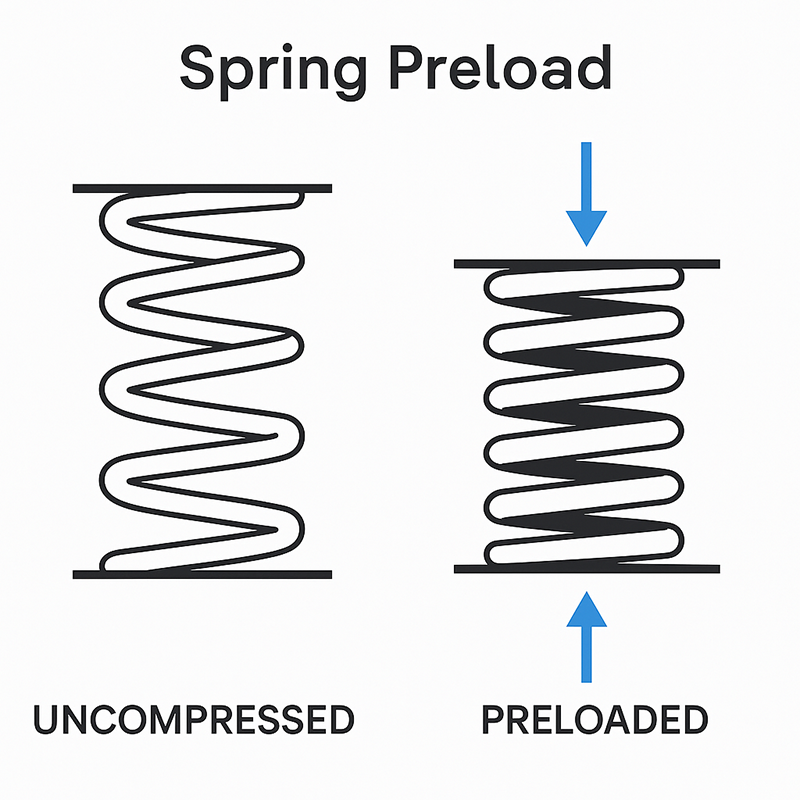
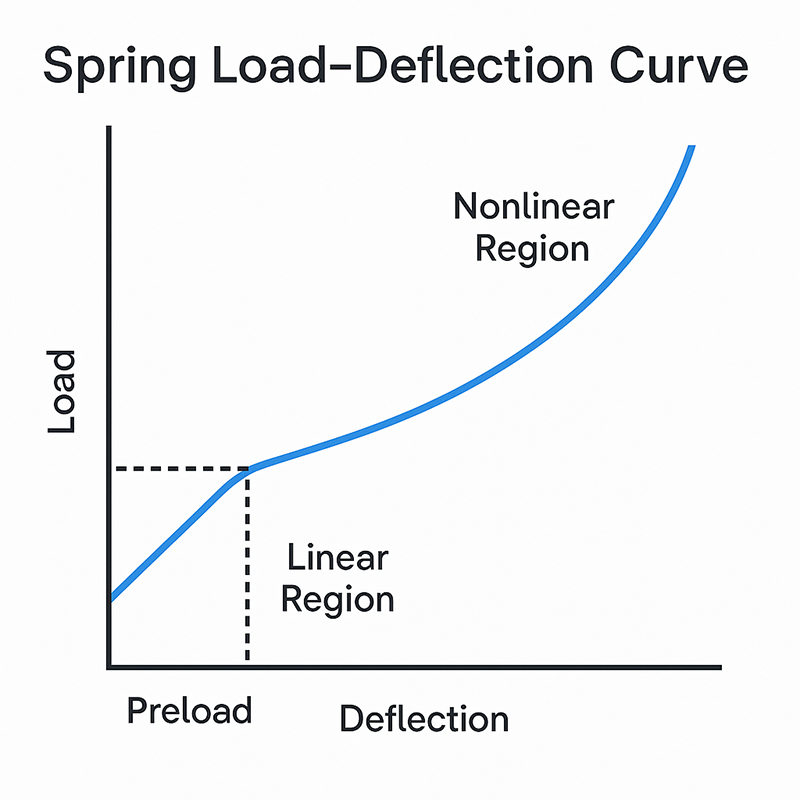
Spring preload refers to the initial force or displacement applied to a spring before it enters its working state. In other words, preload is a “pre-activation” design that places the spring in a certain stress state before any external load is applied. This minimizes the spring’s non-linear range, making its operation more stable and predictable.
The Role of Spring Preload in Mechanical Applications
- Elimination of Free Play: For high-precision equipment, preload can eliminate free play, ensuring immediate mechanical response.
- Improved Response Speed: Since the spring is already under tension, it quickly enters a loaded state, reducing lag time.
- Reduced Vibration and Shock: Preload reduces displacement jumps during sudden loading, resulting in smoother operation.
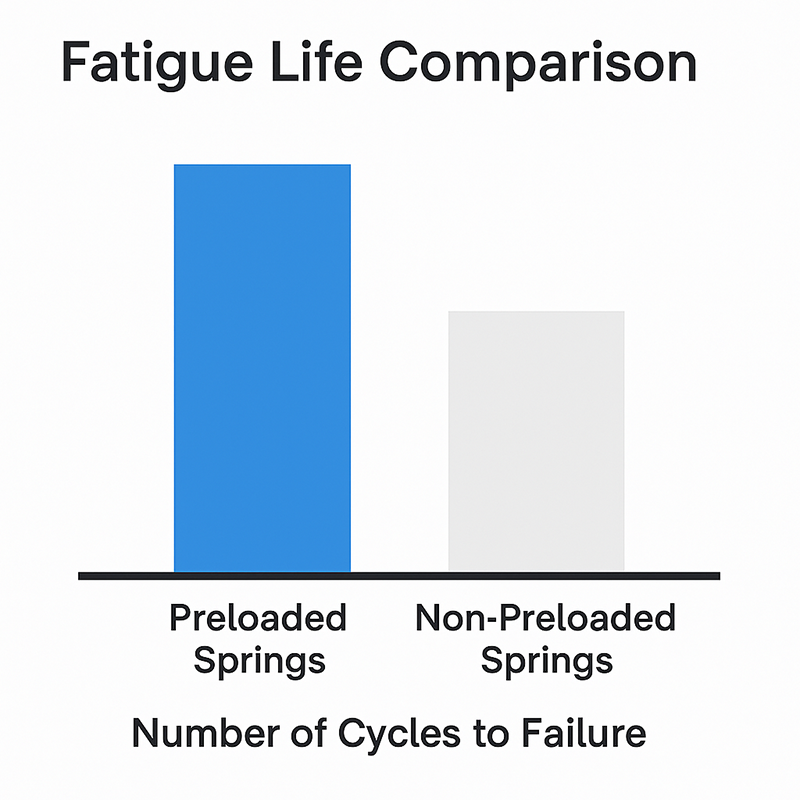
- Enhanced Fatigue Life: Preloading avoids abrupt large displacements, reducing material fatigue accumulation.
Preload Design Principles in Industrial Springs
- How Preload Enhances Spring Performance: Preloading allows the spring to enter a partially deformed state before loading, minimizing the reaction time during operation.
- Impact of Preload on Fatigue Life: Industrial springs under cyclic loading may experience fatigue damage. Preload reduces strain amplitude, significantly extending service life.
- Design Considerations: Preload design must consider working load, spring material properties, and environmental conditions. Excessive preload may lead to spring yield or premature failure.
Real-world Applications
- Positioning systems in precision instruments
- Shock absorbers in hydraulic equipment
- Stabilization devices in automotive suspension systems
Conclusion
Preload, as a design strategy, effectively optimizes the response speed, stability, and durability of industrial springs. For high-precision machinery and long-term load environments, proper preload design is key to enhancing performance and extending lifespan. As industrial technology advances, preload will continue to play a vital role in promoting stability and reliability in mechanical design.