
Must-Read for Engineers: Design Tips to Extend Spring Life

Spring Fatigue Design Tips to Extend Spring Life | Makeway Focus Keyword: spring fatigue design Springs in industrial applications are often subjected to high-frequency compression, tension, or torsion. Therefore, their fatigue life is a critical factor in design. This article shares proven engineering tips to extend spring longevity and minimize failure risks. 1. Optimize Stress Distribution in Spring Design Avoid sharp bends, sudden diameter changes, or stress concentration zones. Smooth transitions in geometry help distribute loads more evenly and reduce the chance of fatigue cracks. 2. Choose the Right Material Stainless steel (e.g., SUS304) — Great for corrosion resistance in humid or outdoor environments. Alloy steels (e.g., 65Mn, 17-7PH) — High strength and excellent fatigue resistance. Phosphor bronze or beryllium copper — Ideal for precision and electrical applications. See the AZoM materials database for more detailed specs. 3. Control Travel and Compression Ratio Over-compressing a spring beyond its design limits accelerates fatigue failure. Keep maximum compression under 80% of the free length whenever possible. 4. Apply Surface and Pre-Stress Treatments Shot peening: Improves residual surface stress and delays crack propagation. Pre-setting (pre-stressing): Helps the spring stabilize and avoid early-stage deformation. Research shows that shot peening can improve fatigue life by over 50%. Source: ScienceDirect Study 5. Avoid Excessive Heat Exposure High temperatures can reduce a spring’s ability to retain stress, especially in alloy steels. Use heat-treated materials and ensure operational temperature stays within safe limits. 6. Case Study: High-Frequency Springs in Robotic Arms A robotic arm in a manufacturing line experienced repeated spring failures within six months. The original springs used untreated steel. After switching to shot-peened 17-7PH alloy and optimizing the compression ratio, service life increased more than fourfold. Conclusion Boosting spring fatigue life reduces maintenance needs and enhances system reliability. To learn more, explore our custom spring solutions or contact our engineering team.
Spring’s Role in Drop and Shock-Resistant Design

Spring Design in Drop and Shock-Resistant Electronics | Makeway Focus Keyword: spring shock absorption design Consumer electronics—from smartphones to wearable devices—must endure occasional drops, vibrations, and shocks. Behind the scenes, spring components serve as essential protective elements, absorbing impact energy and enhancing product durability. In this article, we explore how well-designed springs support drop resistance and vibration damping in compact electronic structures. You can also explore our spring product range. 1. Why Use Springs in Shock-Resistant Structures? Springs act as mechanical energy buffers. During a drop, they compress or flex to absorb kinetic energy, preventing force transmission to fragile internal components. They’re also crucial in systems exposed to continual vibration (e.g., earbuds, handheld devices). Read design principles from Engineers Edge – Spring Dampers. See test-based evaluations by the U.S. National Institute of Standards and Technology (NIST) on spring fatigue under repetitive impact in electronics. 2. Types of Springs Used in Anti-Shock Designs Compression springs — Commonly placed under batteries or PCBs to absorb vertical shock. Torsion springs — Useful in hinge-based folding devices to dampen lateral impacts. Wave springs — Ideal for tight spaces where axial cushioning is needed. Wire forms — Custom shaped to fit odd geometries inside consumer gadgets. Read more on real-world shock spring solutions in our engineering case studies. 3. Key Design Considerations When designing springs for shock resistance in electronics, engineers must consider: Deflection limit: Must absorb shock without permanent deformation. Fatigue life: Should endure thousands of drop cycles. Material choice: Stainless steel, phosphor bronze, or nickel alloys for consistent elasticity. Size constraints: Must deliver performance in tight internal spaces. Community discussions on optimal spring placement during shock events can be found on StackExchange Engineering Forum. 4. Application Example: Smartphone Battery Bay In many smartphones, miniature compression springs are placed beneath battery terminals. When the phone drops, the spring compresses slightly, buffering the shock while maintaining contact stability. Similar designs appear in rugged smartwatches and action cameras. IEEE Spectrum also reports on shock-resistance mechanisms in mobile electronics, including micro-spring-based cushioning. 5. Conclusion Springs may be tiny, but their role in shock-proofing electronics is critical. A well-engineered spring solution can extend product life, reduce failure rates, and enhance user satisfaction. For tailored designs, explore our custom spring solutions or contact our engineering team.
What Is a Custom Spring? Everything You Need to Know

What Is a Custom Spring? Benefits and Use Cases Focus Keyword: custom spring When standard solutions fall short, a custom spring — also known as a made-to-order spring — becomes essential for meeting precise mechanical or spatial needs. Tailored for unique applications, custom springs allow engineers to define material, shape, tension, and performance characteristics with precision. 1. What Is a Custom Spring? A custom spring is a spring manufactured to meet exact specifications outside of standard stock dimensions. These may include specific loads, environmental resistance, cycle life, or installation constraints. They can be compression springs, extension springs, torsion springs, or wire forms. See ThomasNet’s custom spring design guide for an industry overview. 2. When Do You Need a Custom Spring? Space is limited and standard sizes won’t fit Unique forces or deflections are required The environment is extreme (e.g., high temperature, corrosion) Appearance or finish requirements are critical 3. What Can Be Customized? At Makeway LLC, we help customers customize: Wire diameter and spring diameter Free length and working length End type (e.g. closed and ground, open ends) Material: Stainless steel, music wire, phosphor bronze, Inconel, etc. Finish: Zinc plating, powder coating, passivation 4. Benefits of a Custom Spring Custom springs allow for optimized product performance and can extend lifecycle or improve energy efficiency. With the right spring, engineers can reduce component wear, improve safety, and enhance user experience. You can read related applications in our engineering case studies. 5. How to Order a Custom Spring Ordering a custom spring is simple. Here’s how the process works: Send your drawing or describe your application needs Receive a technical review and quote Approve sample or prototype (if needed) Mass production begins You can start by contacting our engineering team for consultation and support. For more details on the custom manufacturing process, check Engineers Edge – Spring Design Portal. Conclusion Custom springs offer maximum flexibility in mechanical design. Whether you’re building a precision instrument or an industrial machine, partnering with the right spring manufacturer ensures performance, quality, and cost-efficiency. Explore more at Makeway LLC.
The Unsung Hero in Consumer Electronics: 5 Applications of Micro Springs

Focus Keyword: miniature springs in electronics In the world of consumer electronics, countless components work silently behind the scenes. One such unsung hero is the miniature spring — a tiny mechanical element that enables key functionality across compact devices. From smartphones to earbuds, these springs are essential to performance, reliability, and tactile experience. Below we highlight 5 key applications of miniature springs in modern electronics and why they deserve more attention from designers and engineers. 1. Button Mechanisms in Smartphones Miniature springs provide tactile feedback in side buttons (like volume or power keys). Their elastic response ensures long-term durability despite thousands of presses. See related product designs in our spring components catalog. 2. Battery Contacts In devices like remote controls and wireless headphones, micro compression springs help maintain reliable electrical contact as batteries are inserted or shifted. Learn more from TE Connectivity’s battery connector guide. 3. Haptic Feedback Systems Advanced micro springs work in conjunction with actuators to enhance tactile feedback, enabling realistic clicks or vibrations. This is especially important in gaming controllers or wearable tech. 4. Camera Stabilization Modules Some smartphone camera modules use miniature tension springs to help balance lens movement in optical image stabilization (OIS) systems. These must be precise and fatigue-resistant under continuous motion. 5. Internal Connectors & Sockets Micro springs ensure reliable contact in plug-in parts such as SIM trays, USB-C sockets, or foldable hinge mechanisms. View more examples in our case study section. Conclusion Though often hidden from view, miniature springs are vital to the success of modern electronic products. Understanding their applications empowers engineers to design more compact, reliable, and satisfying user experiences. Explore more spring innovations at Makeway LLC — your partner for precision mechanical components.
🛠 Industrial Applications: How to Optimize Spring Fatigue Life?

Spring Fatigue Life Optimization | Makeway LLC Keyword: spring fatigue life In industrial machinery and high-load applications, springs are often subjected to cyclic loads. Their fatigue life directly impacts the safety and efficiency of equipment. This article outlines key design strategies, material choices, and heat treatment methods to extend spring service life. To learn more about our custom spring solutions, visit our product catalog or contact us for expert consultation. 1. Common Causes of Spring Fatigue Failure Excessive cyclic loads exceeding the material fatigue limit Stress concentrations from sharp corners or surface flaws Internal inclusions or surface corrosion in materials Improper heat treatment causing structural defects 2. Five Key Design Tips to Improve Fatigue Life Control working stress: Keep maximum stress well below the fatigue limit. Avoid stress concentrations: Optimize end design with smooth transitions. Improve surface quality: Polishing or shot peening significantly enhances fatigue life. Select the right materials: Use high-fatigue-resistance steels like SUP10, 17-7PH stainless, or chrome-silicon alloys. Use proper heat treatment: Quenching, tempering, and aging help refine microstructure and relieve stress. Explore more in our technical blog for deeper insights into industrial spring design. 3. The Role of Material Selection Common spring materials such as 65Mn, SUS304, and Inconel X-750 have distinct fatigue properties. Choose materials based on load frequency, corrosion environment, and temperature conditions. For a detailed guide, refer to Engineer’s Edge – Spring Material Properties. 4. Case Study: Enhancing Fatigue Life in Torsion Springs A miniature torsion spring used in an electronic device originally lasted fewer than 100,000 cycles. By switching to SUS301 stainless steel and incorporating preload design, the life increased to over 500,000 cycles. Learn more about similar projects in our case study section. 5. Conclusion Though small, springs require meticulous design. Mastering fatigue optimization techniques significantly improves product reliability and lifecycle — a must-have skill for every engineer. For more solutions, visit Makeway LLC.
The 25th Guangzhou International Spring Industry Exhibition Successfully Concluded
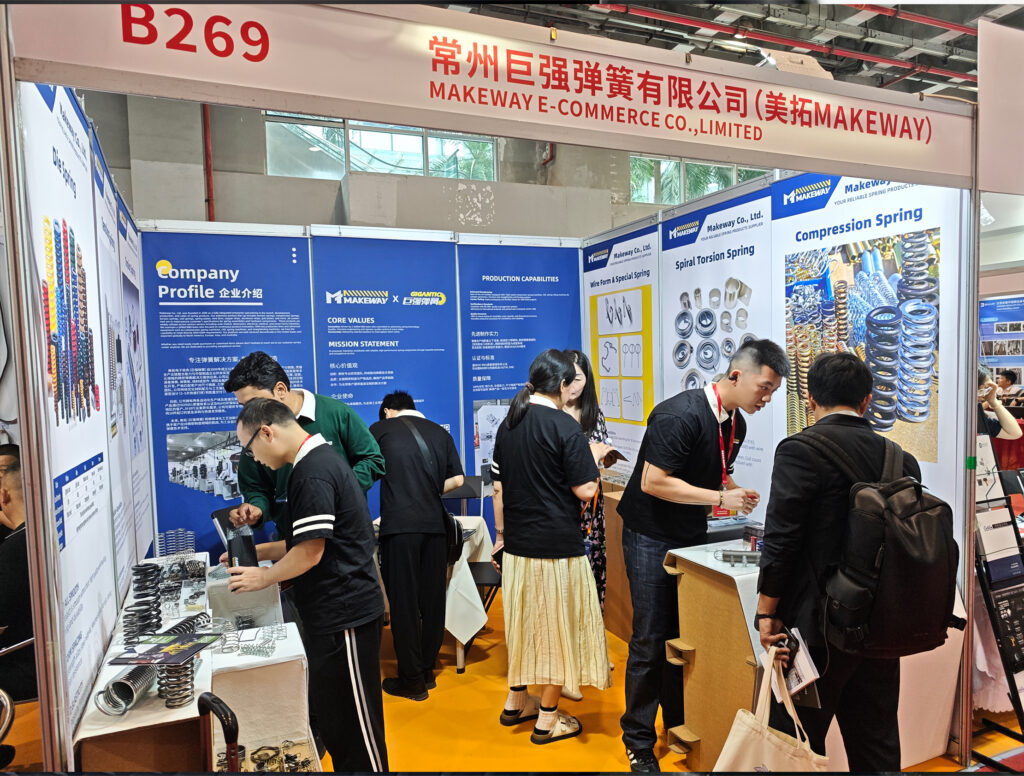
In May 2025, the 25th Guangzhou International Spring Industry Exhibition came to a successful close at the Pazhou Exhibition Center. MAKEWAY participated actively in the event, showcasing a wide range of high-quality spring products that attracted significant attention from both domestic and international visitors. During the exhibition, the MAKEWAY team engaged in face-to-face discussions with a large number of attendees, introducing our advanced spring manufacturing capabilities and technical strengths. Our featured products—including compression springs, extension springs, and torsion springs—were well received by industry professionals. The event was a great success not only in strengthening relationships with existing partners but also in establishing valuable connections with new customers. Many of these new contacts expressed strong interest in our products, highlighting their high quality, durability, and innovative design. Visitors acknowledged that MAKEWAY’s springs are ideal for applications across various industries, particularly in automation equipment, precision instruments, and consumer electronics, where reliability and performance are crucial. We sincerely thank all customers, partners, and friends who visited our booth. Moving forward, MAKEWAY will continue to innovate and deliver even better spring solutions to meet the evolving needs of global industries. For more information about our products and updates, please visit our official website: https://makeway-llc.com/
Typical Application Cases of Compression Springs in Industrial Machinery
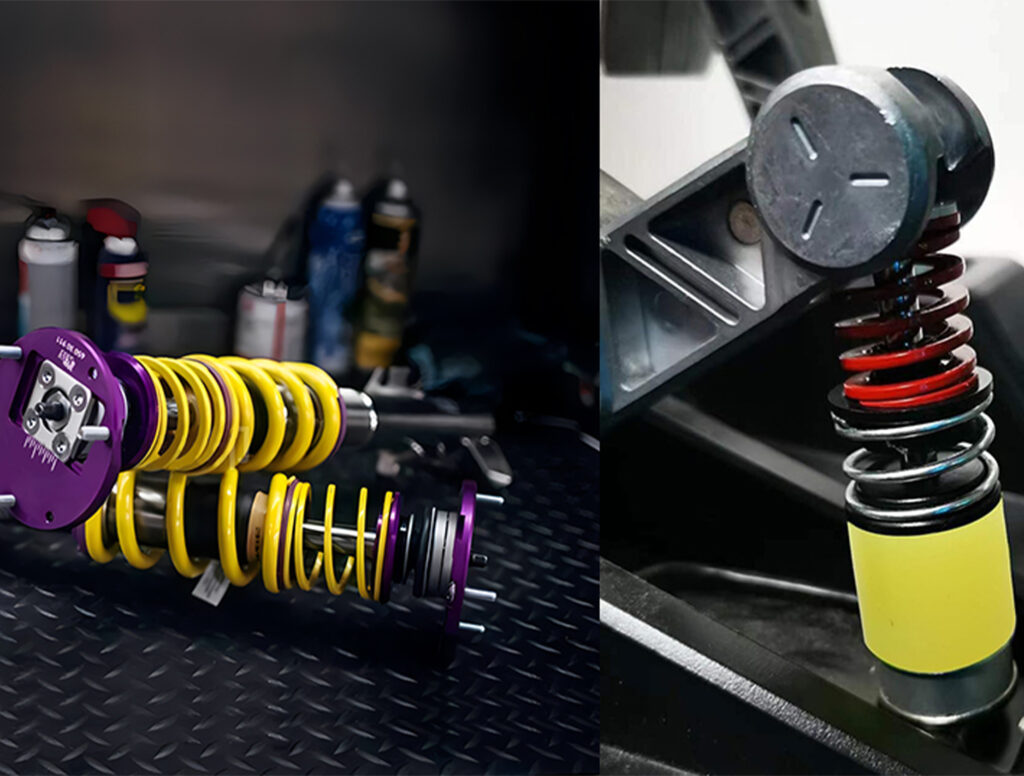
5 Typical Applications of Compression Springs in Industrial Machinery 5 Typical Applications of Compression Springs in Industrial Machinery 1. Shock Absorption Systems Compression springs are widely used in shock absorption systems to cushion impacts and reduce vibrations. This is crucial in heavy machinery, vehicles, and even construction equipment. Authoritative Reference: Engineering Toolbox – Spring Calculations 2. Valve Mechanisms In many industrial machines, valves require precise opening and closing mechanisms. Compression springs ensure that valves operate smoothly and maintain optimal pressure during operation. Learn more about our Valve Control Systems. Authoritative Reference: Valve Magazine – Springs in Valve Applications 3. Industrial Presses Compression springs are an integral part of industrial presses, where they assist in maintaining consistent pressure and support during stamping and molding processes. Explore our high-performance Industrial Press Solutions. Authoritative Reference: Springer – Advanced Manufacturing Technology 4. Load Balancing Systems In load-balancing applications, compression springs are used to distribute weight evenly across mechanical structures. This prevents strain and extends the lifespan of equipment. Visit our Load Balancing Solutions for more information. Authoritative Reference: Machine Design – Fundamentals of Spring Design 5. Suspension Systems One of the most common applications of compression springs is in suspension systems. They help absorb shocks from uneven terrain and provide stability to vehicles and industrial platforms. Learn more about our Suspension Solutions. Authoritative Reference: SAE International – Suspension System Design Conclusion Compression springs are vital in a range of industrial applications, offering stability, precision, and durability. At Makeway LLC, we specialize in providing top-quality industrial spring solutions tailored to your needs. Visit our Product Page to explore more.
The Principle Analysis of Pre-compression Design in Industrial Springs
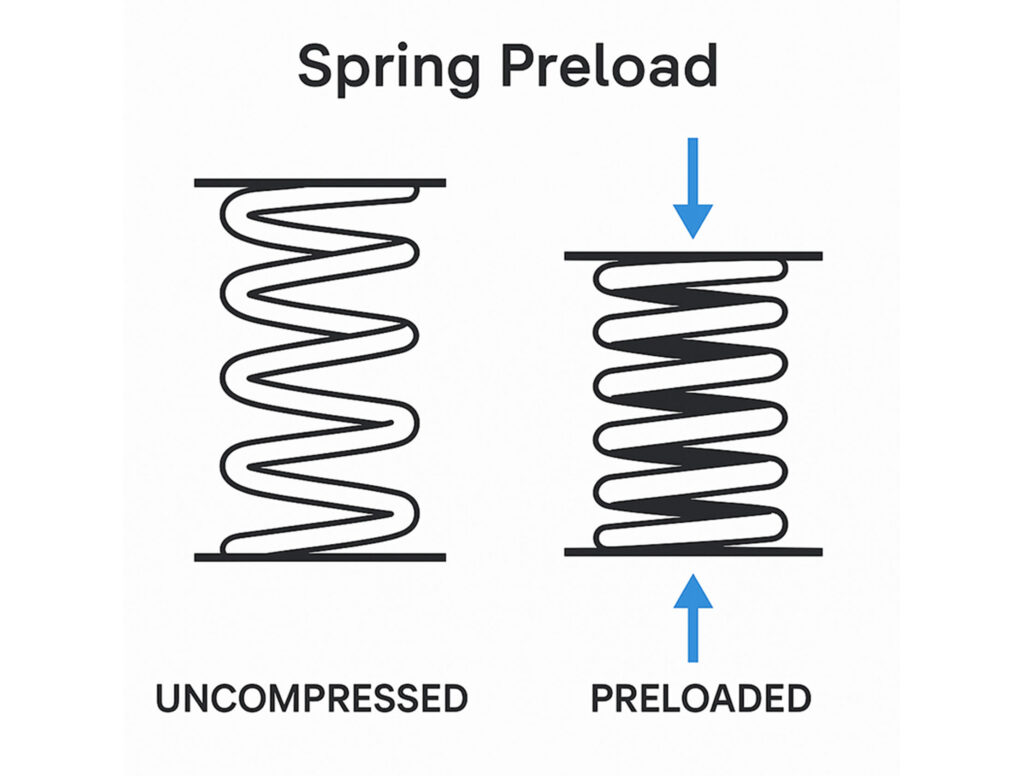
Introduction In industrial mechanical design, springs are fundamental components widely used in damping, energy storage, buffering, and more. Preload, as a critical design strategy, significantly improves spring performance and reliability. So, what is preload? How does it affect the practical application of industrial springs? This article provides a detailed analysis of preload design principles and its essential role in mechanical applications. What is Spring Preload? Spring preload refers to the initial force or displacement applied to a spring before it enters its working state. In other words, preload is a “pre-activation” design that places the spring in a certain stress state before any external load is applied. This minimizes the spring’s non-linear range, making its operation more stable and predictable. The Role of Spring Preload in Mechanical Applications Elimination of Free Play: For high-precision equipment, preload can eliminate free play, ensuring immediate mechanical response. Improved Response Speed: Since the spring is already under tension, it quickly enters a loaded state, reducing lag time. Reduced Vibration and Shock: Preload reduces displacement jumps during sudden loading, resulting in smoother operation. Enhanced Fatigue Life: Preloading avoids abrupt large displacements, reducing material fatigue accumulation. Preload Design Principles in Industrial Springs How Preload Enhances Spring Performance: Preloading allows the spring to enter a partially deformed state before loading, minimizing the reaction time during operation. Impact of Preload on Fatigue Life: Industrial springs under cyclic loading may experience fatigue damage. Preload reduces strain amplitude, significantly extending service life. Design Considerations: Preload design must consider working load, spring material properties, and environmental conditions. Excessive preload may lead to spring yield or premature failure. [Insert Real Application Scene Images here] Real-world Applications Positioning systems in precision instruments Shock absorbers in hydraulic equipment Stabilization devices in automotive suspension systems Conclusion Preload, as a design strategy, effectively optimizes the response speed, stability, and durability of industrial springs. For high-precision machinery and long-term load environments, proper preload design is key to enhancing performance and extending lifespan. As industrial technology advances, preload will continue to play a vital role in promoting stability and reliability in mechanical design. References Makeway LLC Official Website Springer – Authoritative Books and Research on Spring Design Engineering Toolbox – Engineering Tools and Design Calculations
Visit MAKEWAY at the 25th Guangzhou International Spring Industry Exhibition

Visit MAKEWAY at the 25th Guangzhou International Spring Industry Exhibition MAKEWAY Spring Company is honored to announce our participation in the 25th Guangzhou International Spring Industry Exhibition. This exhibition is one of the most important events in the spring manufacturing industry. It brings together leaders, manufacturers, and professionals from around the world. Therefore, it presents an excellent opportunity for you to explore new spring technologies and innovative solutions. We encourage you to visit our booth to see firsthand how MAKEWAY is leading the way in spring manufacturing. Event Details: Date: May 10-12, 2025 Location: China Import and Export Fair Complex, Area C, 980 Xingang East Road, Haizhu District, Guangzhou, China Why Should You Visit MAKEWAY at the Exhibition? MAKEWAY specializes in precision-engineered springs. Whether you require compression springs, torsion springs, or tension springs, our products are designed to meet the highest quality standards. Here’s why you should visit us: Explore Our Product Range: Learn about our compression springs, torsion springs, and tension springs, all tailored to various applications. Experience Live Demonstrations: Watch how we manufacture and test our springs in real-time. Meet Our Experts: Our engineering team will be on hand to discuss your specific needs and offer custom solutions. Discover New Innovations: Stay ahead of the curve by learning about the latest developments in spring technology. Expand Your Network: Connect with industry peers, suppliers, and potential business partners. Our Products at the Exhibition MAKEWAY is renowned for our high-quality springs. Our precise manufacturing processes guarantee durability, performance, and reliability. Let us take a moment to highlight some of our featured products: Compression Springs Compression springs are ideal for applications that require high load resistance. Available in various materials, including stainless steel, carbon steel, and alloy steel, these springs can withstand significant compressive forces without losing their shape or strength. Torsion Springs Torsion springs work by storing energy through twisting. These springs are perfect for applications involving rotational movement, such as garage doors or automotive parts. We ensure that all torsion springs are manufactured to precise specifications for peak performance. Tension Springs Tension springs resist stretching forces and are commonly used in pull-back mechanisms, automotive components, and industrial machinery. We provide a wide range of sizes and materials to meet your specific requirements. Network and Gain Industry Insights The exhibition is the perfect place to discover the latest trends, technologies, and innovations in spring manufacturing. Moreover, it offers a valuable opportunity to connect with leaders in the industry, share ideas, and discuss future projects. By attending, you will see firsthand how MAKEWAY is driving innovation in spring manufacturing. If you are interested in meeting our team or scheduling a one-on-one discussion, please contact us today. We are eager to meet you at the exhibition! Don’t miss this chance to visit MAKEWAY at the Guangzhou Spring Exhibition! For more details, visit the official website of the Guangzhou International Spring Industry Exhibition. Visit MAKEWAY at the 25th Guangzhou Spring Exhibition | May 10-12, 2025
How Springs are Made: From Steel Wire to Precision Components

Springs are essential components used in many industries, from industrial machinery to consumer electronics. However, the process of making these springs involves several steps, and each step is crucial to ensuring the final product’s quality. The journey begins with the selection of the right material. Steel wire, which is often chosen for its strength and flexibility, is carefully selected. This material will eventually be shaped into compression, torsion, or tension springs, depending on the application. Learn more about compression springs here. Choosing the right spring material: High Carbon Steel, Alloy Steel, or Stainless Steel 1. Choosing the Right Material: The Foundation of a Spring The selection of the right material is one of the most important steps. High-carbon steel, alloy steel, and stainless steel are commonly used. Each material has its unique properties, which will affect the spring’s strength, corrosion resistance, and elasticity. For example, high-carbon steel is often selected for general-purpose springs due to its durability. Stainless steel, on the other hand, is preferred when resistance to corrosion is required. These materials are thoroughly tested before they are used in the manufacturing process. Cold and Hot Drawing: Steel wire transformation in spring manufacturing 2. Drawing the Steel Wire: Cold and Hot Drawing Methods Once the material is selected, the wire is drawn into shape. This process can either be done cold or hot, depending on the wire’s intended use. Cold drawing is typically used for smaller diameter wires, as it enhances the material’s strength. In contrast, hot drawing is used for larger diameter wires and allows for easier shaping. Both methods result in wire that is ready for coiling into the desired spring form. Spring Coiling: The process of turning wire into functional spring shapes 3. Forming the Spring: Coiling or Bending After the wire has been drawn, it is then coiled into the desired shape. The wire can be coiled into several types of springs, including compression, torsion, and tension springs. For compression springs, the wire is wound into a helix. This process is performed on a compression spring machine. Torsion springs are coiled to resist rotational forces, while tension springs are designed to resist pulling forces. Special machines are used to ensure the springs are accurately coiled. Heat Treatment: The process of strengthening springs through heat 4. Heat Treatment: Strengthening the Spring Heat treatment is used to enhance the mechanical properties of the spring. During this process, the spring is heated to a specific temperature, then cooled rapidly to harden it. Different heat treatments, such as annealing, quenching, and tempering, are employed to adjust the spring’s strength and flexibility. These processes are critical to ensuring the spring performs as expected in its final application. Precision Finishing: Ensuring the perfect dimensions and flatness of the spring ends 5. Precision Finishing: Ensuring Accuracy After heat treatment, the spring undergoes a series of finishing processes. These include cutting, grinding, and polishing. The ends of the spring are ground to ensure they are flat, which is essential for proper installation. These steps ensure that the spring meets the required specifications and can function as intended in various applications. Additionally, each spring is tested for its mechanical properties to ensure its performance. Surface Treatment: Adding coatings to enhance the spring’s durability and corrosion resistance 6. Surface Treatment: Enhancing Durability In certain cases, surface treatments are applied to improve the spring’s durability. This may include electroplating, coating, or other methods. Electroplating involves applying a thin layer of metal, such as zinc or nickel, to protect the spring from corrosion. Coating methods, such as powder coating, are also used to provide additional protection against wear and corrosion. These treatments are especially important for springs used in harsh environments. 7. Quality Control: Ensuring Perfect Performance Finally, the spring undergoes a series of rigorous tests. These tests are conducted to ensure that the spring meets the required specifications for strength, elasticity, and durability. The spring is subjected to various loads and tested for its performance over time. Springs that pass these tests are deemed ready for use in their respective applications. 8. Applications: Where Springs are Used Springs are used in a variety of industries, from automotive to aerospace, electronics, medical devices, and more. Depending on the application, the type of spring and material chosen will vary. Compression springs are often used in mechanical assemblies, while torsion springs and tension springs are used in more specialized equipment. Custom springs are frequently designed to meet specific requirements, ensuring optimal performance in each application. If you are interested in learning more about our custom springs or need assistance selecting the right spring for your application, contact us today. For more information on spring manufacturing and materials, check out the detailed guide from Springer, a leading publisher in mechanical engineering.